
Online Education vs Distance Education: Which Is Better for You?
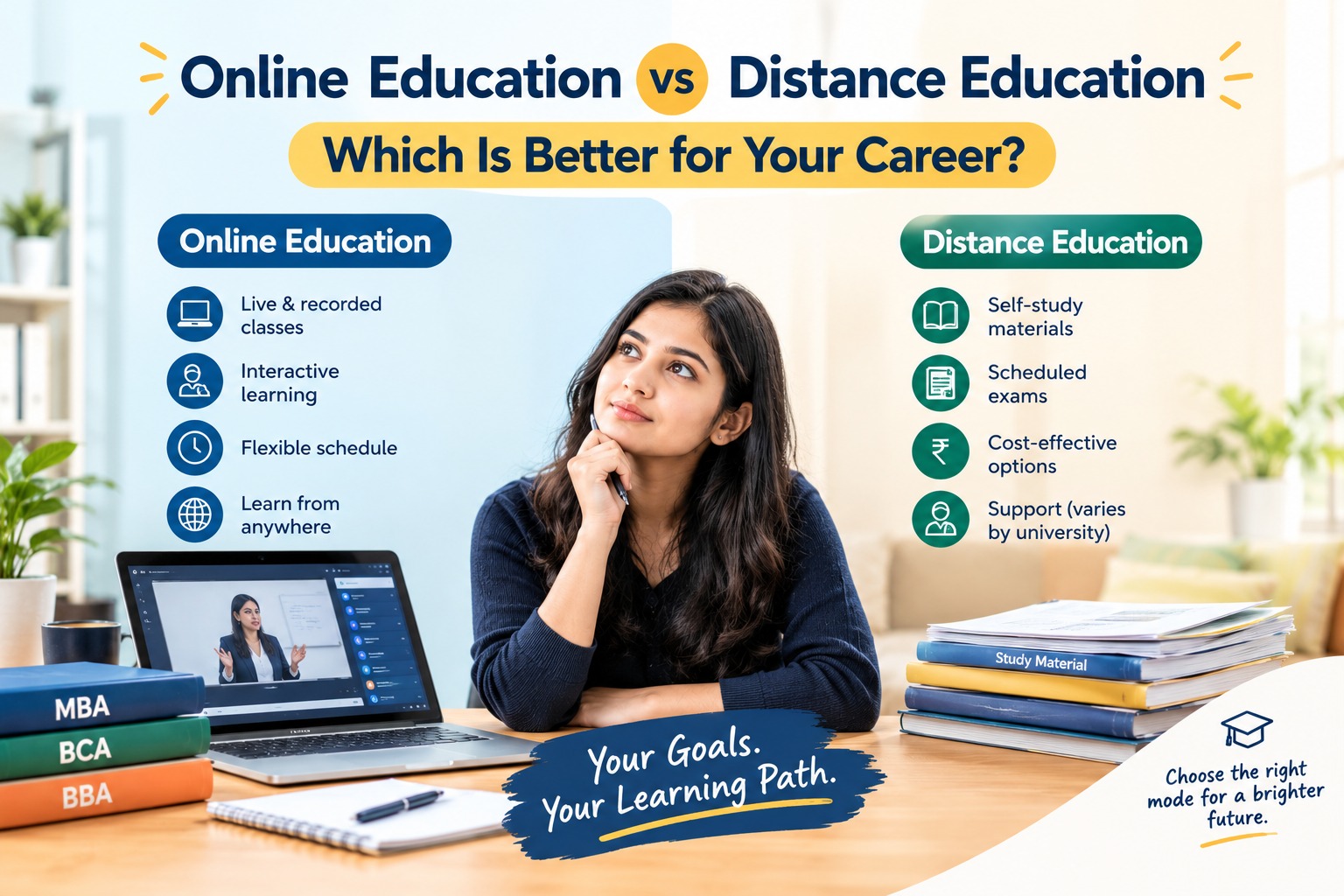
Choosing the right mode of education is an important decision that can shape your academic journey and career opportunities. Today, students and working professionals have more options than ever before, including traditional classroom learning, online education, and distance education.
Among these options, online degree courses are becoming an attractive choice for learners who want to pursue higher education while managing their jobs, businesses, or personal responsibilities.
Quick take
There is no single answer for every student. Online education suits learners who want guided, digital learning with instructor interaction, while distance education suits those who prefer independent study. The quality and recognition of the specific program matter more than the mode alone.
But which option is better: online education or distance education? Let’s understand the differences and explore how online degree programs can help you achieve your academic and professional goals.
What Is Online Education?
Online education is a learning method in which students access educational resources, lectures, assignments, and academic support through digital platforms. Depending on the program, students may attend live classes, watch recorded lectures, participate in discussions, and interact with instructors online.
Online degree programs allow learners to study from their preferred location without regularly travelling to a physical campus.
Benefits of Online Degree Courses
Flexible learning schedule
One of the biggest advantages of online education is flexibility. Students can often access recorded lectures and digital study materials at convenient times, making it easier to balance education with professional and personal commitments.
Learn from anywhere
Online learning eliminates the need for daily travel to a college or university. Students can study from home or another suitable location with a reliable internet connection.
Access to digital learning resources
Online programs may provide recorded sessions, e-books, presentations, assignments, and other digital resources that support independent learning and revision.
Suitable for working professionals
People who are already employed can explore further education without necessarily leaving their jobs. An online degree may help them build academic knowledge relevant to their current role or future career plans.
Develop digital skills
Studying online can help learners become more comfortable with digital communication, virtual collaboration, online research, and technology-based learning tools.
What Is Distance Education?
Distance education is a mode of learning in which students study away from the educational institution rather than attending regular in-person classes. It traditionally relies on self-study materials, textbooks, assignments, and scheduled examinations.
Many distance education programs now also provide online resources and digital student support.
Benefits of distance education
- Study independently: Learners can organise much of their study schedule around their other responsibilities.
- Reduce travel requirements: Regular campus attendance is generally not required, although examinations or other activities may require physical attendance.
- Manage work and studies: Distance learning can be suitable for individuals who prefer independent study.
- Access educational opportunities: Learners may pursue recognised academic qualifications without relocating to another city.
Online Education vs Distance Education: Key Differences
Although both modes allow students to study without attending regular campus classes, their learning experiences may differ.
| Comparison factor | Online education | Distance education |
|---|---|---|
| Learning method | Digital platforms and online classes | Self-study materials and remote learning |
| Teacher interaction | Often available through live classes and digital communication | Depends on the institution and program |
| Study materials | Digital lectures, videos, e-books, and assignments | Printed or digital materials |
| Flexibility | High, depending on class schedules | Often high |
| Learning experience | May offer more structured online interaction | Often requires greater independent study |
| Best suited for | Learners seeking digital instruction and academic interaction | Learners who prefer independent and flexible study |
Program details must be confirmed against the official information of the university for your admission session.
Good to know: These categories can overlap. Some distance programs include interactive online classes, while some online degree programs require students to attend scheduled sessions or examinations.
Which Is Better: Online Education or Distance Education?
There is no single answer for every student. The right choice depends on your learning preferences, career goals, available time, and the structure of the program.
Online education may be a better fit if you prefer guided learning, digital resources, scheduled classes, and opportunities to interact with instructors and fellow students.
Distance education may be more suitable if you prefer independent study and need greater control over your study routine.
Before enrolling, compare the curriculum, learning support, examination format, fees, program duration, and recognition status. The quality and structure of the specific program matter more than the mode of education alone.
Why Choose an Online Degree Course?
An online degree can be a practical option for learners who want to continue their education while managing existing responsibilities.
For example, a working professional may pursue a relevant postgraduate qualification to strengthen their knowledge, while a recent graduate may explore an online program to continue their academic journey.
The benefits depend on the degree selected, the learner’s effort, the institution’s academic standards, and the relevance of the qualification to the intended career.
Before choosing a program, consider the following:
- Does the course align with your academic background and career goals?
- Is the university and specific online program appropriately recognised?
- Does the curriculum cover relevant subjects and skills?
- Are academic support, examinations, and assessments clearly explained?
- Are the total fees and payment terms transparent?
Making an informed decision can help you choose a program that fits your needs and long-term plans.
How Eduplier Supports Your Online Education Journey
At Eduplier, our focus is on helping learners explore online degree opportunities that align with their educational aspirations and professional goals.
Whether you are a recent graduate looking to continue your studies or a working professional planning to advance your qualifications, understanding your options is the first step towards making the right decision.
When exploring online degree programs through Eduplier, learners should review the available course details, eligibility requirements, university information, program structure, fees, and recognition status before enrolling.
Your education should fit your goals and circumstances. With careful planning and the right program, online learning can provide a flexible route to continuing your education.
Who Should Consider Online Degree Courses?
Online degree programs may be worth considering for:
- Recent graduates planning to pursue higher education.
- Working professionals seeking additional academic qualifications.
- Entrepreneurs and business owners managing busy schedules.
- Learners who cannot regularly travel to a college campus.
- Individuals looking to continue studying alongside family responsibilities.
The suitability of an online degree depends on the learner’s requirements and the recognition and structure of the chosen program.
Tips for Succeeding in Online Education
Enrolling in an online degree is only the beginning. Consistent effort and effective study habits are essential for making the most of the learning experience.
- Create a study schedule: Set aside dedicated time for lectures, assignments, and revision.
- Set clear academic goals: Break your learning objectives into manageable weekly and monthly targets.
- Participate actively: Attend available live sessions, ask questions, and use academic support resources.
- Stay organised: Keep track of assignment deadlines, examinations, and study materials.
- Choose the right program: Check recognition, curriculum, eligibility, fees, and learning support before making a decision.
Final Thoughts
Both online education and distance education offer valuable opportunities for learners who want to pursue higher education with flexibility. Online education may provide a more interactive and digitally supported learning experience, while distance education often emphasises independent study.
The best choice is the one that matches your academic needs, career aspirations, and preferred learning style.
Eduplier aims to help learners explore online degree opportunities and make informed decisions about their educational future. Research your options, check program recognition, and choose a course that supports your long-term goals.
Frequently Asked Questions
1. Is online education better than distance education?
Online education may be better for learners who prefer digital classes and interactive support, while distance education may suit those who prefer independent study. The right choice depends on the program and the learner’s needs.
2. Are online degrees valid in India?
Online degrees can be recognised in India when offered by appropriately recognised institutions under the applicable UGC regulations. Students should verify the institution and the specific program for the relevant academic session before enrolling.
3. Can working professionals pursue online degree courses?
Yes. Online degree programs can help working professionals continue their education while managing employment, subject to the program’s eligibility and attendance requirements.
4. Do online degree courses require regular college attendance?
Many online programs do not require regular physical campus attendance, but students may need to attend scheduled online classes, examinations, or other required academic activities.
5. How can I choose the right online degree program?
Compare the program’s recognition, curriculum, eligibility, duration, fees, assessment methods, and academic support. Choose a program that aligns with your qualifications and career goals.
6. How can Eduplier help students explore online education?
Learners can use Eduplier’s available program information to explore online degree options and review relevant course details before deciding which program best meets their needs.
Ready to explore your online education options? Get free career counselling